

We drove by the USAF base on a regular basis - and we didn't know a thing about what was happening inside the perimeters. From Africa to Asia and Middle East, the U.S government have, for years, been destroying many lives in the Middle East under the disguise of fighting terrorists, especially the murdering of children.
And the military action starts to happen hidden in plain sight on military bases IN America. By 2013 there were 66 drone bases on American soil. The U.S. has now deployed drones armed with lethal force in Iraq, Afghanistan, Yemen, Somalia and Libya. Some 60 bases throughout the world are directly connected to the drone program–from Florida to Nevada in the U.S., from Ethiopia and Djibouti in Africa, to Qatar in the Middle East and the Seychelles Islands in the Indian Ocean.
According to Turse, for the last three years, Xe Services, the company formerly known as Blackwater, has been in charge of arming the fleet of Predator drones at CIA clandestine sites in Pakistan and Afghanistan.
The current and future drone bases can be viewed at: http://batchgeo.com/map/?i=45a74c2619467dbe1a74d28b2bb8a741&q=&x=5&y=12http://batchgeo.com/map/?i=45a74c2619467dbe1a74d28b2bb8a741&q=&x=5&y=12

In February 2013 Sen. Lindsey Graham (R-S.C.) was speaking to the Rotary Club in Easley, S.C when he enthusiastically announced that the drone strikes had killed 4,700 people ( we do not know the actual count ) failing to specify that the majority of these deaths are innocents and children.
How can one justify such massacres let alone be enthusiastic? This is not only bad foreign policy, but cold blooded murder.
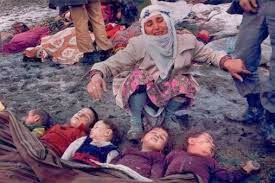
I doubt that any grief can equal the grief of a mother or father holding his/her dead child. I also doubt that any anger can be as justified as when a parents seeks out to punish the murderer of their child.
A Pew survey reported that 75% of Pakistanis consider us their enemy. How can they think any differently? A former adviser to General Petraeus stated, “Every one of these dead noncombatants represents an alienated family, a new desire for revenge, and more recruits for a militant movement.” Indeed, militant groups have rapidly been forming, such as Lashkar, which has been attacking U.S. troops across the border in Afghanistan. The sentiment goes beyond Pakistan. A spokesperson for Yemen, also under attack told a U.S. Senate committee, “What radicals had previously failed to achieve in my village, one drone strike accomplished in an instant: There is now an intense anger and growing hatred of America.”

The use of such unmanned aircraft in the area began under President George W Bush, but their use has more than doubled under the Obama administration. Although the US does not routinely speak publicly about operations involving drones, President Obama confirmed that they regularly strike suspects in Pakistan’s tribal areas. Source: http://www.bbc.co.uk/news/world-south-asia-10713898

For more than five years, Brandon Bryant worked in an oblong, windowless container about the size of a trailer, where the air-conditioning was kept at 17 degrees Celsius (63 degrees Fahrenheit) and, for security reasons, the door couldn’t be opened. Bryant and his coworkers sat in front of 14 computer monitors and four keyboards. When Bryant pressed a button in New Mexico, someone died on the other side of the world.
The container is filled with the humming of computers. It’s the brain of a drone, known as a cockpit in Air Force parlance. But the pilots in the container aren’t flying through the air. They’re just sitting at the controls.
Bryant was one of them, and he remembers one incident very clearly when a Predator drone was circling in a figure-eight pattern in the sky above Afghanistan, more than 10,000 kilometers (6,250 miles) away. There was a flat-roofed house made of mud, with a shed used to hold goats in the crosshairs, as Bryant recalls. When he received the order to fire, he pressed a button with his left hand and marked the roof with a laser. The pilot sitting next to him pressed the trigger on a joystick, causing the drone to launch a Hellfire missile. There were 16 seconds left until impact.
“These moments are like in slow motion,” he says today. Images taken with an infrared camera attached to the drone appeared on his monitor, transmitted by satellite, with a two-to-five-second time delay.
With seven seconds left to go, there was no one to be seen on the ground. Bryant could still have diverted the missile at that point. Then it was down to three seconds. Bryant felt as if he had to count each individual pixel on the monitor. Suddenly a child walked around the corner, he says.
Second zero was the moment in which Bryant’s digital world collided with the real one in a village between Baghlan and Mazar-e-Sharif.
Bryant saw a flash on the screen: the explosion. Parts of the building collapsed. The child had disappeared. Bryant had a sick feeling in his stomach.
“Did we just kill a kid?” he asked the man sitting next to him.Then, someone they didn’t know answered, someone sitting in a military command center somewhere in the world who had observed their attack. “No. That was a dog,” the person wrote.
“Yeah, I guess that was a kid,” the pilot replied.
“Was that a kid?” they wrote into a chat window on the monitor.
They reviewed the scene on video. A dog on two legs?
The years of directing missiles by laser in so-called “terminal guidance” operations and watching their impact on the ground left him a broken man, he told the GQ magazine in the profile entitled “Confessions of a Drone Warrior.”
When he quit the air force in 2011 after six years’ service, he was presented with a list of achievements for his squadron’s missions that counted the number of enemies killed in action as 1,626.
“The number made me sick to my stomach,” he said.
Der Spiegel - http://www.globalresearch.ca/the-woes-of-an-american-drone-operator/5315869
Pakistani family of drone strike victim gives harrowing testimony to Congress
Translator brought to tears by family's plea as Congress hears from civilian victims of alleged US drone strike for the first time
The family of a 67-year-old midwife from a remote village in North Waziristan told lawmakers on Tuesday about her death and the "CIA drone" they say was responsible. Their harrowing accounts marked the first time Congress had ever heard from civilian victims of an alleged US drone strike.
Rafiq ur Rehman, a Pakistani primary school teacher who appeared on Capitol Hill with his children, Zubair, 13, and Nabila, 9, described his mother, Momina Bibi, as the "string that held our family together". His two children, who were gathering okra with their grandmother the day she was killed, on 24 October 2012, were injured in the attack.
"Nobody has ever told me why my mother was targeted that day," Rehman said, through a translator. "Some media outlets reported that the attack was on a car, but there is no road alongside my mother’s house. Others reported that the attack was on a house. But the missiles hit a nearby field, not a house. All of them reported that three, four, five militants were killed."
Instead, he said, only one person was killed that day: "Not a militant but my mother."
"In urdu we have a saying: aik lari main pro kay rakhna. Literally translated, it means the string that holds the pearls together. That is what my mother was. She was the string that held our family together. Since her death, the string has been broken and life has not been the same. We feel alone and we feel lost."
An Amnesty International report, published last week, lists Bibi among 900 civilians they say have been killed by drone strikes, a far higher number than previously reported. The Amnesty report said the US may have committed war crimes and should stand trial for its actions.
The US has repeatedly claimed very few civilians have been killed by drones. It argues its campaign is conducted "consistent with all applicable domestic and international law". Unofficial reports, however, have suggested that hundreds have been killed in Pakistan alone, with up to 200 children killed.
In poignant testimony, Rehman's son, Zubair, described the day of the attack, the day before the Muslim holy day of Eid, as a "magical time filled with joy". He told lawmakers that the drone had appeared out of a bright blue sky, the colour of sky most beloved by his grandmother and himself, he said.
"As I helped my grandmother in the field, I could see and hear the drone hovering overhead, but I didn’t worry" he said. "Why would I worry? Neither my grandmother nor I were militants."
"When the drone fired the first time, the whole ground shook and black smoke rose up. The air smelled poisonous. We ran, but several minutes later the drone fired again. "
"People from the village came to our aid and took us to hospital. We spent the night in great agony in at the hospital and the next morning I was operated on. That is how we spent Eid."
Zubair said that fear over the drone attacks on his community have stopped children playing outside, and stopped them attending the few schools that exist. An expensive operation, needed to take the shrapnel out of his leg, was delayed and he was sent back to the village until his father could raise the money, he said.
“Now I prefer cloudy days when the drones don’t fly. When the sky brightens and becomes blue, the drones return and so does the fear. Children don’t play so often now, and have stopped going to school. Education isn’t possible as long as the drones circle overhead.”
According to Zubair, the fundraising took months.
His sister, Nabila, told lawmakers that she had been gathering okra with her brother and grandmother when she saw a drone and "I heard the dum dum noise."
"Everything was dark and I couldn't see anything. I heard a scream. I think it was my grandmother but I couldn't see her.
"All I could think of was running."
Rehman told lawmakers that he is seeking answers to why his mother was targeted. The strike has affected his wider family, who no longer visit because they fear the drones might kill them too.
In testimony that caused the translator to stop and begin to weep, he said: "Congressman Grayson, as a teacher, my job is to educate. But how do I teach something like this? How do I explain what I myself do not understand? How can I in good faith reassure the children that the drone will not come back and kill them, too, if I do not understand why it killed my mother and injured my children?"
He said that his mother was not the first innocent victim of drone strike, but that "dozens of people in my own tribe that I know are merely ordinary tribesman had been killed". He said that numerous families in his community and the surrounding area had lost loved ones, including women and children over the years.
"They have suffered just like I have. I wish they had such an opportunity as well to come tell you their story. Until they can, I speak on their behalf as well. Drones are not the answer."
Rehman said that although the Pakistani government accepted his claim and confirmed details, it said it was not responsible and he has had no compensation to help with the medical treatment for his children.
Rehman said: "In the end I would just like to ask the American public to treat us as equals. Make sure that your government gives us the same status of a human with basic rights as they do to their own citizens. We do not kill our cattle the way US is killing humans in Waziristan with drones. This indiscriminate killing has to end and justice must be delivered to those who have suffered at the hands of unjust."
Asked what he would say to President Barack Obama, Rehman called on the Pakistani and US government to work together to achieve peace.
"I would say to President Obama if I had the opportunity to meet with him is: 'What happened to me and my family was wrong'. I would ask him to find an end, a peaceful end, to what is happening."
"I think that's something that the American government and the Pakistani government can work together to achieve."
Missing from the briefing on Tuesday was the account of Shahzad Akbar, an international critic of US drone policy and the family lawyer, who spearheaded the idea of bringing civilian victims of drone strikes to Congress and who was refused a visa for the third time. Reprieve, the British rights group which together with Brave New Foundation, helped the Rehman family travel to Washington, said he had 6,000 letters supporting his visit.
The hearing was attended by only five members of Congress, and Grayson said such low numbers of lawmakers at hearings were not unusual. Those attending were all Democrats: Rush Holt of New Jersey, Jan Schakowsky of Illinois, John Conyers of Michigan, Rick Nolan of Minnesota, and Grayson, the Florida Democrat responsible for inviting the family to Washington and for holding the hearing.
Each of the lawmakers spoke about the drone programme to call for more transparency or greater oversight. Schakowsky said she agreed with Amnesty International and Human Rights Watch and their call for more transparency and debate about the targeted killing programme. Holt and Conyers called for a congressional investigation into drone strikes.
Grayson, a fierce critic of the wars in Iraq and Afghanistan told the hearing: "Invading from the skies is no different from invading on the grounds. We should never accept that children and loved ones are acceptable collateral damage.” Was there any other human activity, he asked “where 10-30% of the dead are innocent?”
It began with a broadcast of Unmanned: America's Drone Wars, a film by Robert Greenwald of Brave New Foundation, which features the Rahman family.
http://www.theguardian.com/world/2013/oct/29/pakistan-family-drone-victim-testimony-congress
CIA Drone Strikes In Pakistan 2004-2013
Total US strikes: 362
Obama strikes: 310
Total reported killed: 2,629-3,461
Civilians reported killed: 475-891
Children reported killed: 176
Total reported injured: 1,267-1,431

US Covert Action In Yemen 2002-2913
Total confirmed US operations (all): 54-64
Total confirmed US drone strikes: 42-52
Possible extra US operations: 135-157
Possible extra US drone strikes: 77-93Total reported killed (all): 374-1,112
Total civilians killed (all): 72-177
Children killed (all): 27-37
US Covert Action In Somalia 2007-2013
Total US strikes: 10-23
Total US drone strikes: 3-9
Total reported killed: 58-170
Civilians reported killed: 11-57
Children reported killed: 1-3

Partial List of Children Killed
Noor Aziz | 8 | male
Abdul Wasit | 17 | male
Noor Syed | 8 | male
Wajid Noor | 9 | male
Syed Wali Shah | 7 | male
Ayeesha | 3 | female
Qari Alamzeb | 14| male
Shoaib | 8 | male
Hayatullah KhaMohammad | 16 | male
Tariq Aziz | 16 | male
Sanaullah Jan | 17 | male
Maezol Khan | 8 | female
Nasir Khan | male
Naeem Khan | male
Naeemullah | male
Mohammad Tahir | 16 | male
Azizul Wahab | 15 | male
Fazal Wahab | 16 | male
Ziauddin | 16 | male
Mohammad Yunus | 16 | male
Fazal Hakim | 19 | male
Ilyas | 13 | male
Sohail | 7 | male
Asadullah | 9 | male
khalilullah | 9 | male
Noor Mohammad | 8 | male
Khalid | 12 | male
Saifullah | 9 | male
Mashooq Jan | 15 | male
Nawab | 17 | male
Sultanat Khan | 16 | male
Ziaur Rahman | 13 | male
Noor Mohammad | 15 | male
Mohammad Yaas Khan | 16 | male
Qari Alamzeb | 14 | male
Ziaur Rahman | 17 | male
Abdullah | 18 | male
Ikramullah Zada | 17 | male
Inayatur Rehman | 16 | male
Shahbuddin | 15 | male
Yahya Khan | 16 |male
Rahatullah |17 | male
Mohammad Salim | 11 | male
Shahjehan | 15 | male
Gul Sher Khan | 15 | male
Bakht Muneer | 14 | male
Numair | 14 | male
Mashooq Khan | 16 | male
Ihsanullah | 16 | male
Luqman | 12 | male
Jannatullah | 13 | male
Ismail | 12 | male
Taseel Khan | 18 | male
Zaheeruddin | 16 | male
Qari Ishaq | 19 | male
Jamshed Khan | 14 | male
Alam Nabi | 11 | male
Qari Abdul Karim | 19 | male
Rahmatullah | 14 | male
Abdus Samad | 17 | male
Siraj | 16 | male
Saeedullah | 17 | male
Abdul Waris | 16 | male
Darvesh | 13 | male
Ameer Said | 15 | male
Shaukat | 14 | male
Inayatur Rahman | 17 | male
Salman | 12 | male
Fazal Wahab | 18 | male
Baacha Rahman | 13 | male
Wali-ur-Rahman | 17 | male
Iftikhar | 17 | male
Inayatullah | 15 | male
Mashooq Khan | 16 | male
Ihsanullah | 16 | male
Luqman | 12 | male
Jannatullah | 13 | male
Ismail | 12 | male
Abdul Waris | 16 | male
Darvesh | 13 | male
Ameer Said | 15 | male
Shaukat | 14 | male
Inayatur Rahman | 17 | male
Adnan | 16 | male
Najibullah | 13 | male
Naeemullah | 17 | male
Hizbullah | 10 | male
Kitab Gul | 12 | male
Wilayat Khan | 11 | male
Zabihullah | 16 | male
Shehzad Gul | 11 | male
Shabir | 15 | male
Qari Sharifullah | 17 | male
Shafiullah | 16 | male
Nimatullah | 14 | male
Shakirullah | 16 | male
Talha | 8 | male
YEMEN
Afrah Ali Mohammed Nasser | 9 | female
Zayda Ali Mohammed Nasser | 7 | female
Hoda Ali Mohammed Nasser | 5 | female
Sheikha Ali Mohammed Nasser | 4 | female
Ibrahim Abdullah Mokbel Salem Louqye | 13 | male
Asmaa Abdullah Mokbel Salem Louqye | 9 | male
Salma Abdullah Mokbel Salem Louqye | 4 | female
Fatima Abdullah Mokbel Salem Louqye | 3 | female
Khadije Ali Mokbel Louqye | 1 | female
Hanaa Ali Mokbel Louqye | 6 | female
Mohammed Ali Mokbel Salem Louqye | 4 | male
Jawass Mokbel Salem Louqye | 15 | female
Maryam Hussein Abdullah Awad | 2 | female
Shafiq Hussein Abdullah Awad | 1 | female
Sheikha Nasser Mahdi Ahmad Bouh | 3 | female
Maha Mohammed Saleh Mohammed | 12 | male
Soumaya Mohammed Saleh Mohammed | 9 | female
Shafika Mohammed Saleh Mohammed | 4 | female
Shafiq Mohammed Saleh Mohammed | 2 | male
Mabrook Mouqbal Al Qadari | 13 | male
Daolah Nasser 10 years | 10 | female
AbedalGhani Mohammed Mabkhout | 12 | male
Abdel- Rahman Anwar al Awlaki | 16 | male
Abdel-Rahman al-Awlaki | 17 | male
Nasser Salim | 19
The United States motto is, "In God We Trust." We need to change that because it would be hard to justify such a hypocritical motto if we continue to do Satan's bidding. We have met the enemy - and he is us!

Total US strikes: 10-23
Total US drone strikes: 3-9
Total reported killed: 58-170
Civilians reported killed: 11-57
Children reported killed: 1-3

Partial List of Children Killed
PAKISTAN
Name | Age | GenderNoor Aziz | 8 | male
Abdul Wasit | 17 | male
Noor Syed | 8 | male
Wajid Noor | 9 | male
Syed Wali Shah | 7 | male
Ayeesha | 3 | female
Qari Alamzeb | 14| male
Shoaib | 8 | male
Hayatullah KhaMohammad | 16 | male
Tariq Aziz | 16 | male
Sanaullah Jan | 17 | male
Maezol Khan | 8 | female
Nasir Khan | male
Naeem Khan | male
Naeemullah | male
Mohammad Tahir | 16 | male
Azizul Wahab | 15 | male
Fazal Wahab | 16 | male
Ziauddin | 16 | male
Mohammad Yunus | 16 | male
Fazal Hakim | 19 | male
Ilyas | 13 | male
Sohail | 7 | male
Asadullah | 9 | male
khalilullah | 9 | male
Noor Mohammad | 8 | male
Khalid | 12 | male
Saifullah | 9 | male
Mashooq Jan | 15 | male
Nawab | 17 | male
Sultanat Khan | 16 | male
Ziaur Rahman | 13 | male
Noor Mohammad | 15 | male
Mohammad Yaas Khan | 16 | male
Qari Alamzeb | 14 | male
Ziaur Rahman | 17 | male
Abdullah | 18 | male
Ikramullah Zada | 17 | male
Inayatur Rehman | 16 | male
Shahbuddin | 15 | male
Yahya Khan | 16 |male
Rahatullah |17 | male
Mohammad Salim | 11 | male
Shahjehan | 15 | male
Gul Sher Khan | 15 | male
Bakht Muneer | 14 | male
Numair | 14 | male
Mashooq Khan | 16 | male
Ihsanullah | 16 | male
Luqman | 12 | male
Jannatullah | 13 | male
Ismail | 12 | male
Taseel Khan | 18 | male
Zaheeruddin | 16 | male
Qari Ishaq | 19 | male
Jamshed Khan | 14 | male
Alam Nabi | 11 | male
Qari Abdul Karim | 19 | male
Rahmatullah | 14 | male
Abdus Samad | 17 | male
Siraj | 16 | male
Saeedullah | 17 | male
Abdul Waris | 16 | male
Darvesh | 13 | male
Ameer Said | 15 | male
Shaukat | 14 | male
Inayatur Rahman | 17 | male
Salman | 12 | male
Fazal Wahab | 18 | male
Baacha Rahman | 13 | male
Wali-ur-Rahman | 17 | male
Iftikhar | 17 | male
Inayatullah | 15 | male
Mashooq Khan | 16 | male
Ihsanullah | 16 | male
Luqman | 12 | male
Jannatullah | 13 | male
Ismail | 12 | male
Abdul Waris | 16 | male
Darvesh | 13 | male
Ameer Said | 15 | male
Shaukat | 14 | male
Inayatur Rahman | 17 | male
Adnan | 16 | male
Najibullah | 13 | male
Naeemullah | 17 | male
Hizbullah | 10 | male
Kitab Gul | 12 | male
Wilayat Khan | 11 | male
Zabihullah | 16 | male
Shehzad Gul | 11 | male
Shabir | 15 | male
Qari Sharifullah | 17 | male
Shafiullah | 16 | male
Nimatullah | 14 | male
Shakirullah | 16 | male
Talha | 8 | male
YEMEN
Afrah Ali Mohammed Nasser | 9 | female
Zayda Ali Mohammed Nasser | 7 | female
Hoda Ali Mohammed Nasser | 5 | female
Sheikha Ali Mohammed Nasser | 4 | female
Ibrahim Abdullah Mokbel Salem Louqye | 13 | male
Asmaa Abdullah Mokbel Salem Louqye | 9 | male
Salma Abdullah Mokbel Salem Louqye | 4 | female
Fatima Abdullah Mokbel Salem Louqye | 3 | female
Khadije Ali Mokbel Louqye | 1 | female
Hanaa Ali Mokbel Louqye | 6 | female
Mohammed Ali Mokbel Salem Louqye | 4 | male
Jawass Mokbel Salem Louqye | 15 | female
Maryam Hussein Abdullah Awad | 2 | female
Shafiq Hussein Abdullah Awad | 1 | female
Sheikha Nasser Mahdi Ahmad Bouh | 3 | female
Maha Mohammed Saleh Mohammed | 12 | male
Soumaya Mohammed Saleh Mohammed | 9 | female
Shafika Mohammed Saleh Mohammed | 4 | female
Shafiq Mohammed Saleh Mohammed | 2 | male
Mabrook Mouqbal Al Qadari | 13 | male
Daolah Nasser 10 years | 10 | female
AbedalGhani Mohammed Mabkhout | 12 | male
Abdel- Rahman Anwar al Awlaki | 16 | male
Abdel-Rahman al-Awlaki | 17 | male
Nasser Salim | 19
The United States motto is, "In God We Trust." We need to change that because it would be hard to justify such a hypocritical motto if we continue to do Satan's bidding. We have met the enemy - and he is us!


